

Observing without interpreting
And how it gives you more insight to make decisions

I have a client who wants to be more influential at work. He already has formal authority as the head of a department, but influence to him is about how you engage others, not a scope of work.
“I want to influence in the way you sold me on this [coaching],” he said. “You didn’t give me every detail of what we were going to do together.” That had been weeks ago. And now, here we were.
As I listened to him, I was impressed. This guy is an observer. He’s seeking takeaways, not a template. He’s not observing to judge himself or others. He wants to understand someone else’s way of doing things to see what he may want to apply to his vision for his own growth.
It’s not common to see a leader demonstrate this skill of observation so early in an engagement. Specifically, observation defined as listening without interpreting. Noticing what’s present without taking impulsive action on it. Detached without losing your sense of self.
My coaching approach helps people to build this leadership skill because it’s critical for making strong decisions. We guide you to observe your environment, and yourself in that context. Without observation, your data set for decision-making will be incomplete. The numbers in your dashboard are one-dimensional. Observation adds nuance to your perspective while reducing bias.
If you’re looking to improve your observation skills, sit back and consider:
Self-observation: Which stimuli, thoughts, and emotions draw my attention?
Team-observation: How do the people in the teams I lead engage?
Organization-observation: How do we make decisions across the company?
Notice your answers, seek understanding, and accept them without judgment.
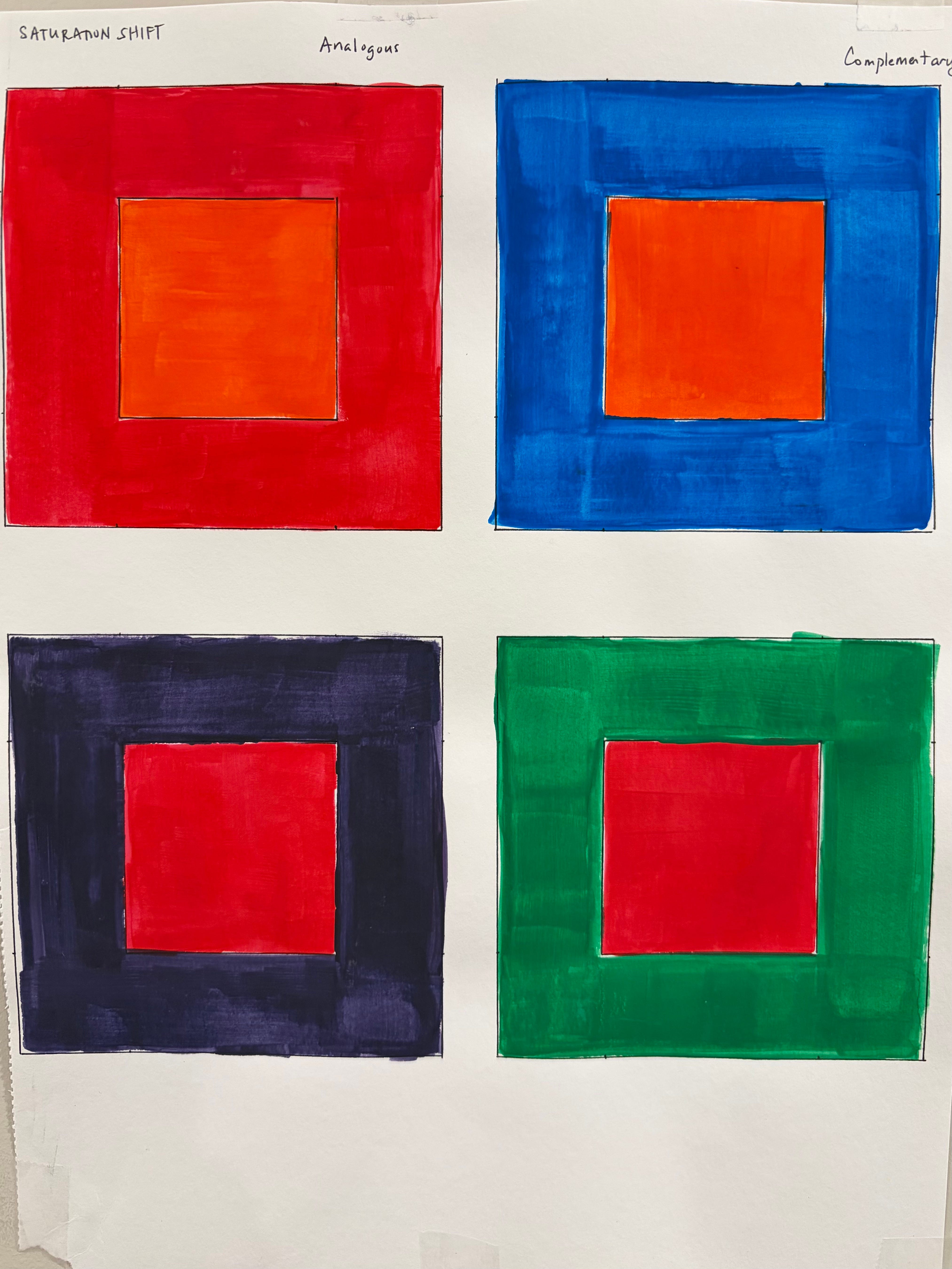
Image: An exercise in observation, from a color theory workshop I took last weekend.
This leader’s comment about how I ‘sold’ him on coaching gave me insight into how he thinks, and it was a gift to me, too. By sharing what he observed in me, and the impact on him, he opened a door for me to observe myself.
I often ask clients for feedback on my coaching as a service, but I can’t recall a time when one told me I was modeling what I preach. I’m just going to sit with that, and see what other learning unfolds.